

Judgment is the last unfair advantage in the age of AI.
Helping experienced leaders strengthen judgment under pressure —
when stakes are real and decisions carry consequences.
If work feels heavier than it used to, you’re not broken. You’re carrying the weight of increased complexity and uncertainty — and your brain is conserving energy and narrowing focus under load.
MIchael Netzley, PhD. Affiliated Faculty & Executive Coach, IMD • 15,000+ leaders across banking, aviation, healthcare, tech and FMCG.
Reality Check

Under pressure, judgment doesn’t fail — it defaults to the patterns your brain has learned to trust.
Pressure changes judgment. That’s the problem most development ignores.
Most leadership development assumes that if you learned it, you’ll use it.
But under pressure, people don’t rise to intentions. They fall back on defaults — patterns that once kept them effective, safe, and valued.
That reversion isn’t laziness.
It’s biology.
And it’s where decision quality quietly drops.
“Most leaders don’t fail dramatically. Their judgment just becomes slightly less reliable — until others notice before they do.”
The Lens

Judgment is a performance skill — and in midlife, it can be trained to excel.
This isn’t about motivation. It’s about brain state — and what the brain defaults to under load.
When stress rises, attention narrows and energy is conserved. The brain prioritises speed and certainty over flexibility and integration.
In those moments, it doesn’t ask, “What’s the best decision?”
It asks, “What usually works for me here?”
That answer is your default operating mode — your identity under pressure.
It’s an adaptation. But when the environment changes, the adaptation can start to limit judgment.
What We Do

Judgment improves when training survives contact with real work.
We work with leaders to strengthen judgment — not reshape personality or chase potential.
At the centre is The Executive Brain Playbook™ — a neuroscience-grounded approach to improving judgment under pressure and sustaining performance into the second half of life.
Engagements include:
• Executive development and leadership intensives
• Individual advisory and coaching
• Virtual programmes and IP licensing (train-the-trainer)
• Interactive virtual keynote addresses
Where appropriate, the work is supported by Path OS — an embedded reinforcement layer designed to prevent the post-programme drop-off that most leaders experience.
Executives using Path OS receive short, precisely timed nudges after a programme or engagement — not reminders or motivational messages, but carefully designed choice frames that reduce friction at the moment action matters.
Nudges help leaders apply new ways of thinking in real situations, when days get busy and pressure returns. Rather than asking for more effort, Path OS supports follow-through by making the desired action easier to take and the old default harder to slip back into.
The result is that new insight survives contact with real work — protecting the investment made in development and keeping judgment aligned with how decisions are actually made.
Proven Where Decisions Matter
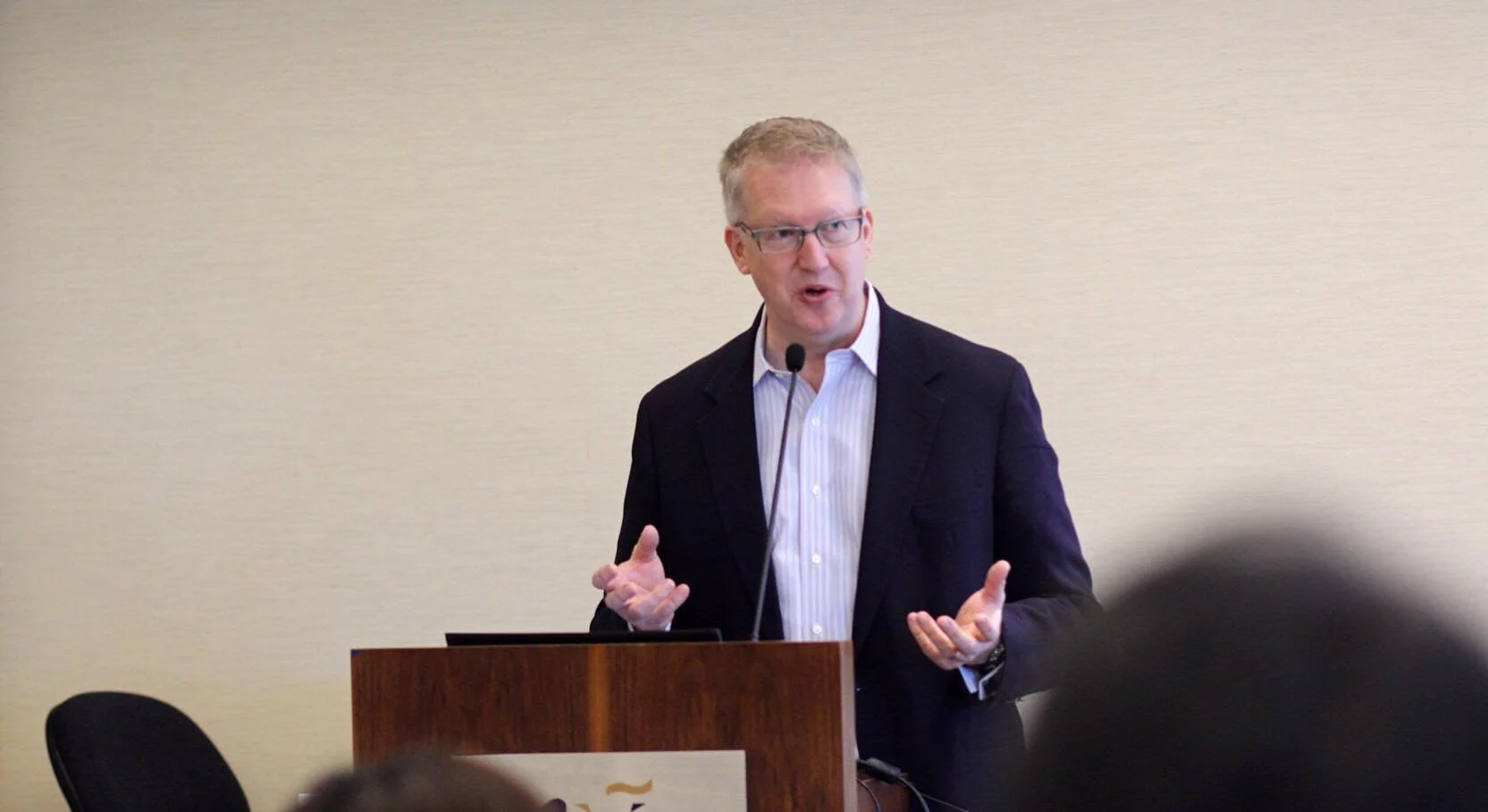
Grounded in neuroscience, shaped by decisions with real consequences.
Our Founder, Dr. Michael Netzley, is Affiliated Faculty and an Executive Coach at IMD Business School. Over the past two decades, we have worked with more than 15,000 leaders in environments where judgment under pressure is non-negotiable.
Clients include BNP Paribas, UBS, UOB, Citi, Bank Mandiri, Unilever, Merck, GSK, IBM, IHG, Hilton, Minor Hotels, SP Group, Singapore Airlines, and Changi Airport Group.
Michael’s work has been featured in the New York Times, I by IMD magazine, Dialogue by Duke CE, MIT’s Technology Review and Channel News Asia.
Who This is For

For leaders carrying real responsibility — not performing leadership.
For leaders who carry responsibility — and want decisions that hold up under pressure.
This work resonates with experienced professionals who:
• Make consequential decisions under time pressure.
• Feel the cognitive cost of constant complexity and uncertainty.
• Want the second half of leadership — and life — to be consequential, not exhausting
It is not for quick fixes, leadership theatre, or optimisation culture that treats humans like machines.
Better judgment isn’t a trait.
It’s a capability you can build.
AI is changing what work is. It isn’t changing the fact that judgment decides outcomes — especially under uncertainty.
When trained deliberately, judgment doesn’t decline with age — it deepens, steadies, and sharpens into the second half of life.
If you want performance that holds when pressure returns, let’s begin there.

When judgment holds, performance follows